Journey 04 · Namibia
Sand, and Then Water
Sossusvlei, Etosha, the coast

Published 5 Jun 2026 · Travelled 2–16 May 2026
- 9 moments
- 15 days
- 1245 km
- Spring
- Namibia
- 70mm · f/8 · 1/1000 · ISO 200
- 23.8900° S, 16.0000° E
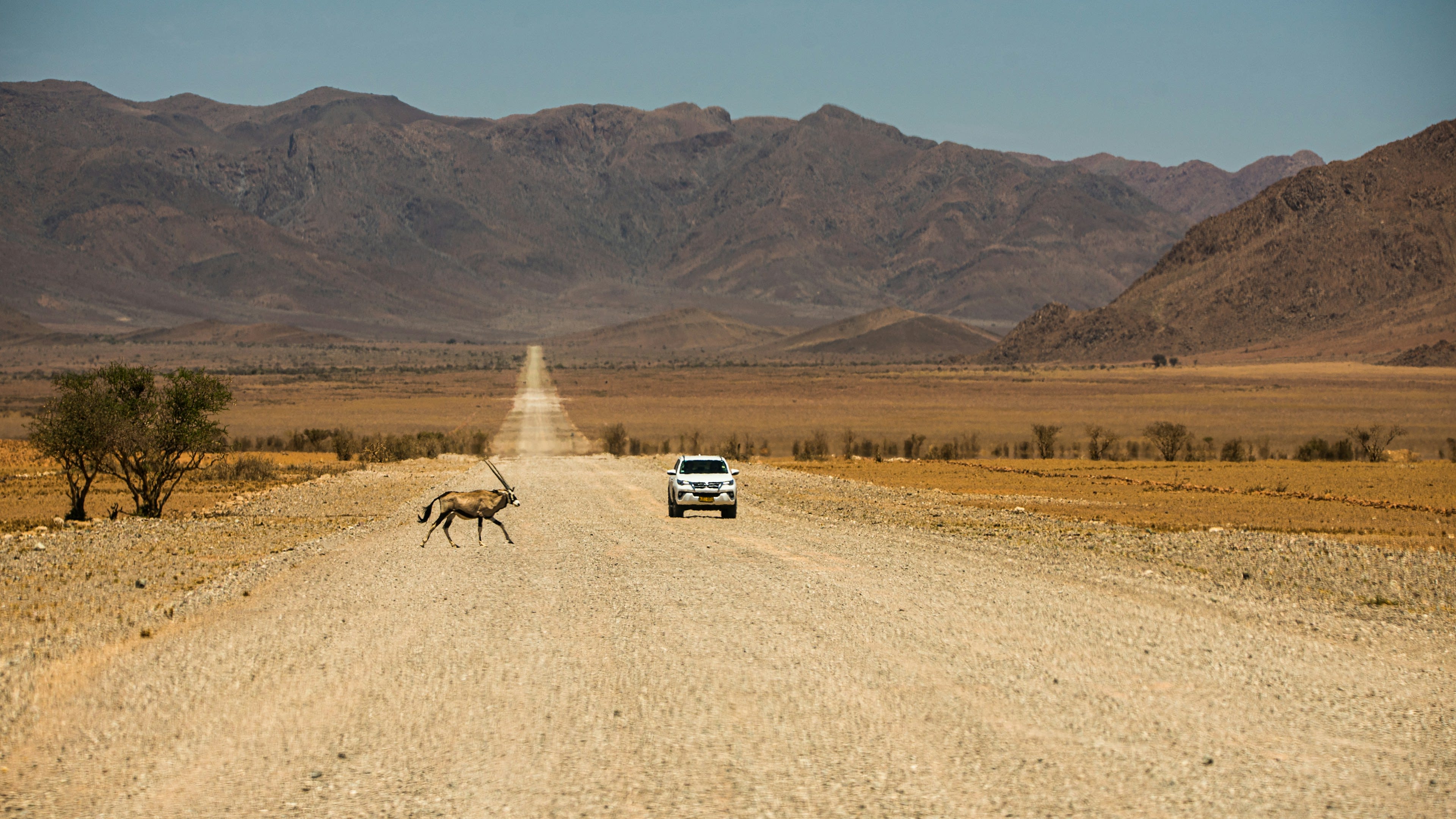
- The C19, north of Solitaire
- 11:20
- 29°C, clear, hot
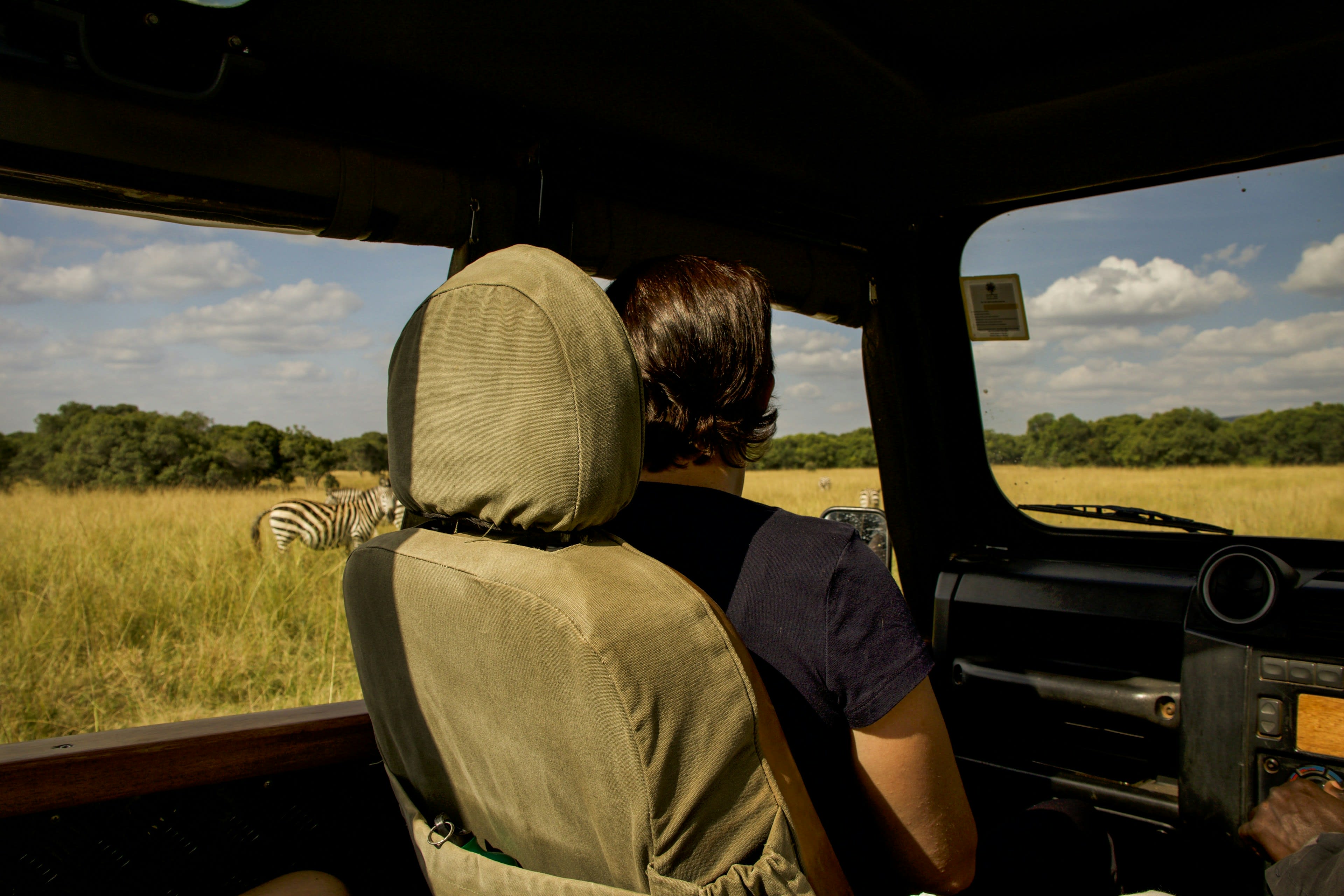
Namibia is gravel roads at eighty kilometres an hour with nothing on either side for two hours at a time, and the only thing that changes is the colour of the grit. We passed four vehicles between Solitaire and the dunes. My brother-in-law drove and I sat with the camera in my lap on the off chance, which is the correct posture and also useless.
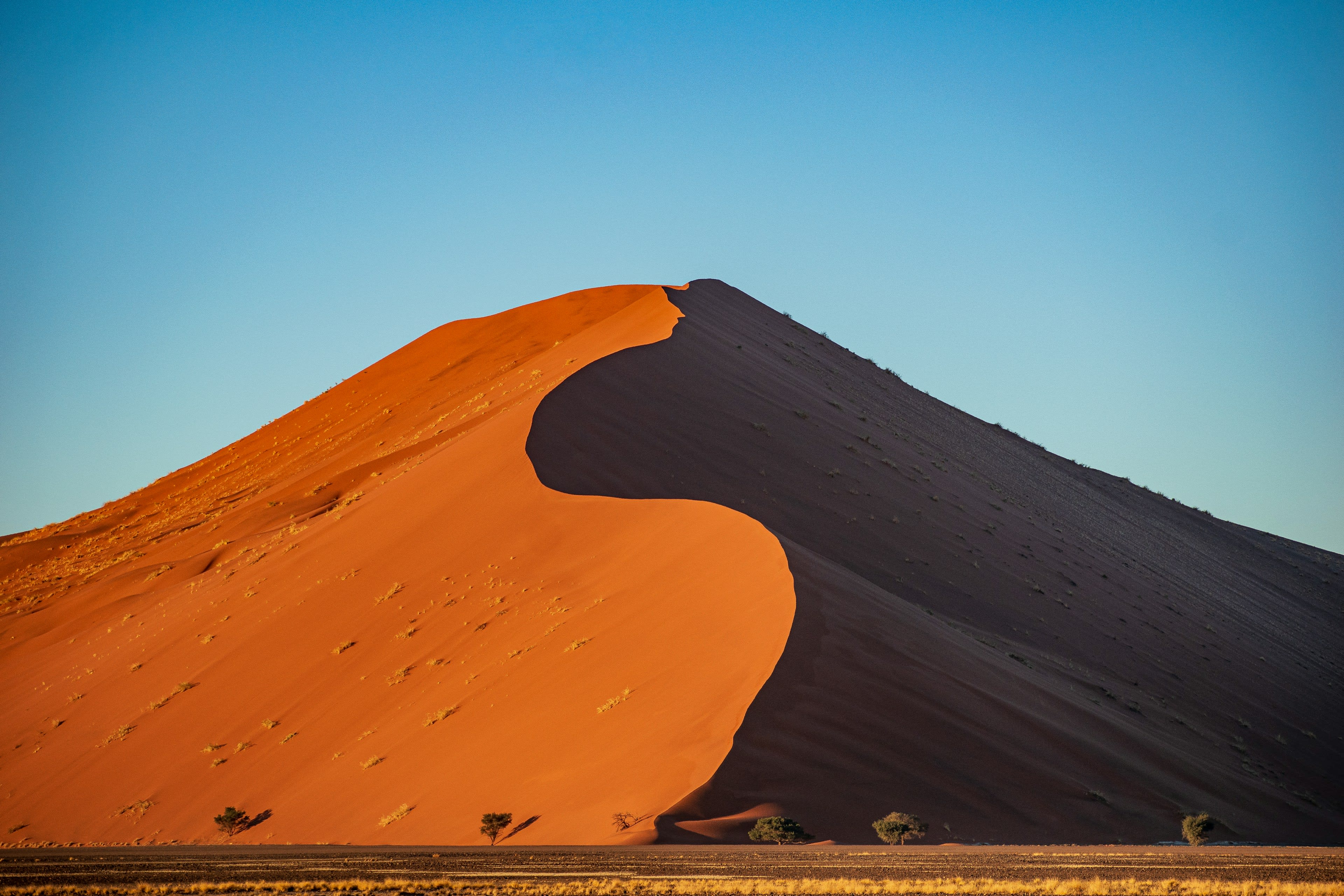
- 135mm · f/11 · 1/500 · ISO 100
- 24.7300° S, 15.4500° E
- Dune 45, Sossusvlei
- 07:05
- 12°C, clear, cold before eight
The dunes at Sossusvlei run north-south so at sunrise one face is lit and the other is not, and the line between them is a single knife edge you could balance a coin on. This is why everybody photographs the same dune at the same time. I climbed a third of the way up it, sat down, and used a long lens on the ridge rather than a wide one on the whole thing.
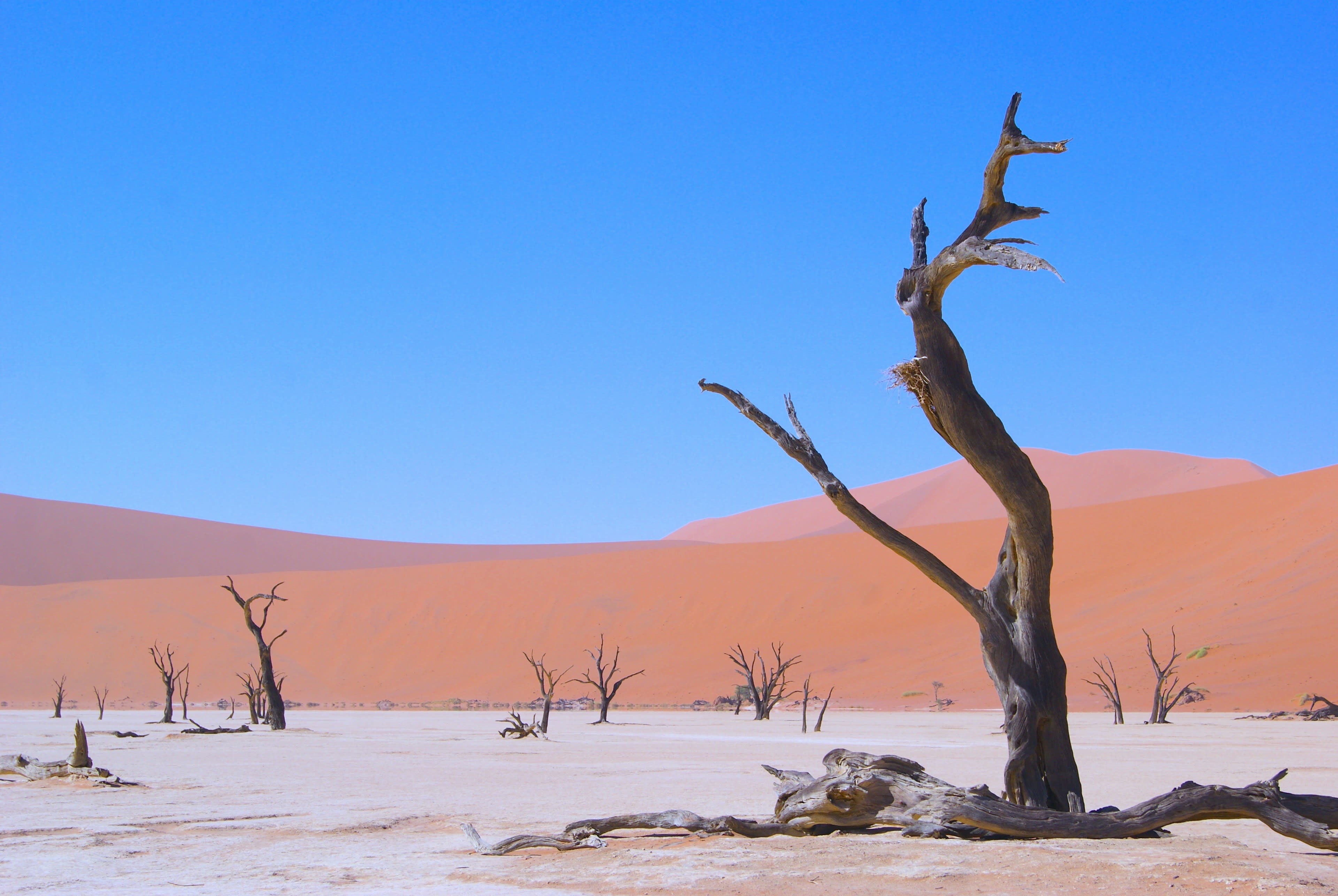
- 200mm · f/11 · 1/640 · ISO 100
- 24.7592° S, 15.2925° E
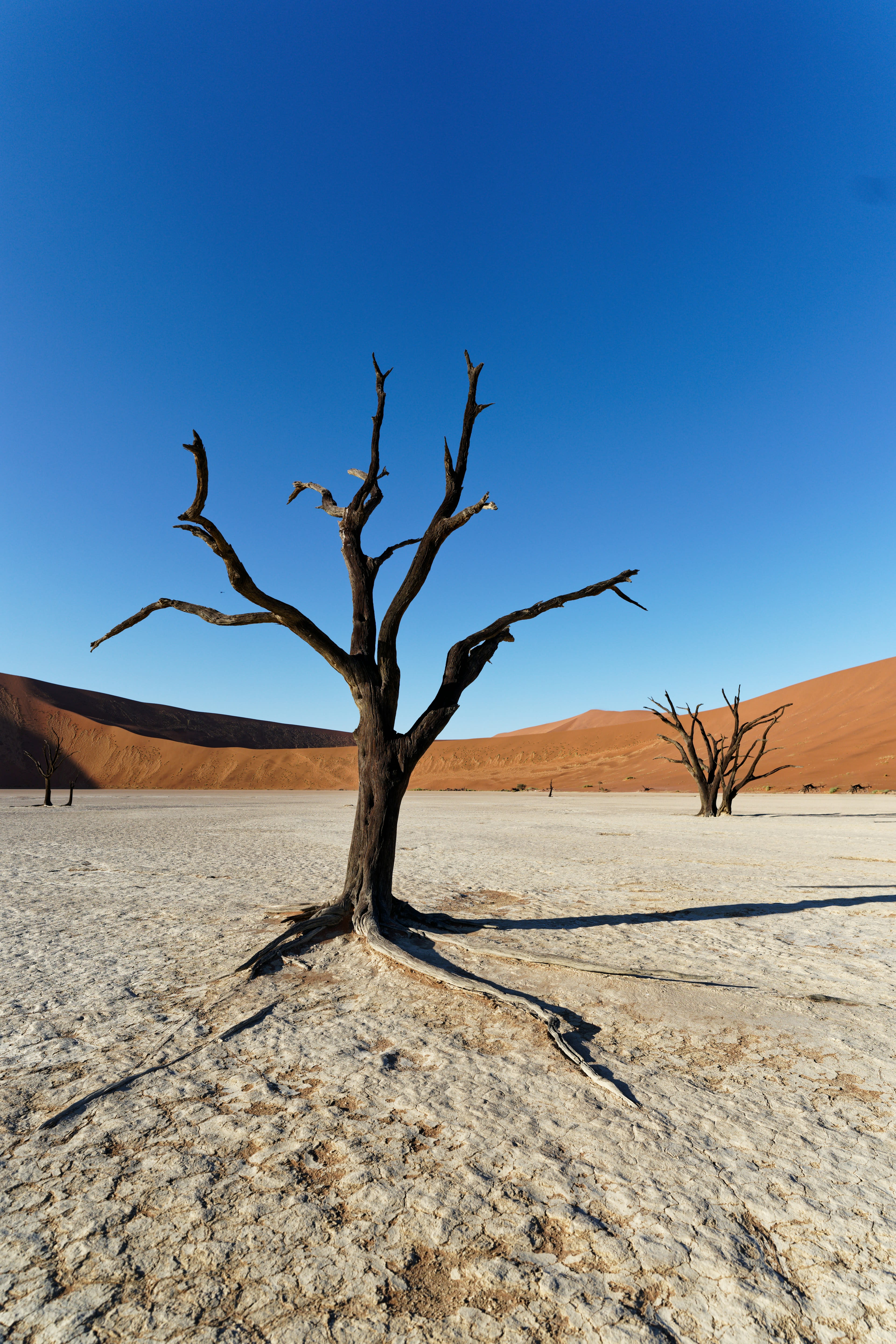
- 200mm · f/11 · 1/640 · ISO 100
- 24.7592° S, 15.2925° E
- Deadvlei
- 08:40
- 21°C, clear, heating fast
The pan is white clay, the dunes behind it are orange, the sky is a hard blue, and standing in the middle of it are camelthorns that died about nine hundred years ago when the river changed and have not rotted because nothing here rots. It is four colours and no gradients. The second frame is one tree, because after twenty minutes I stopped trying to include everything.
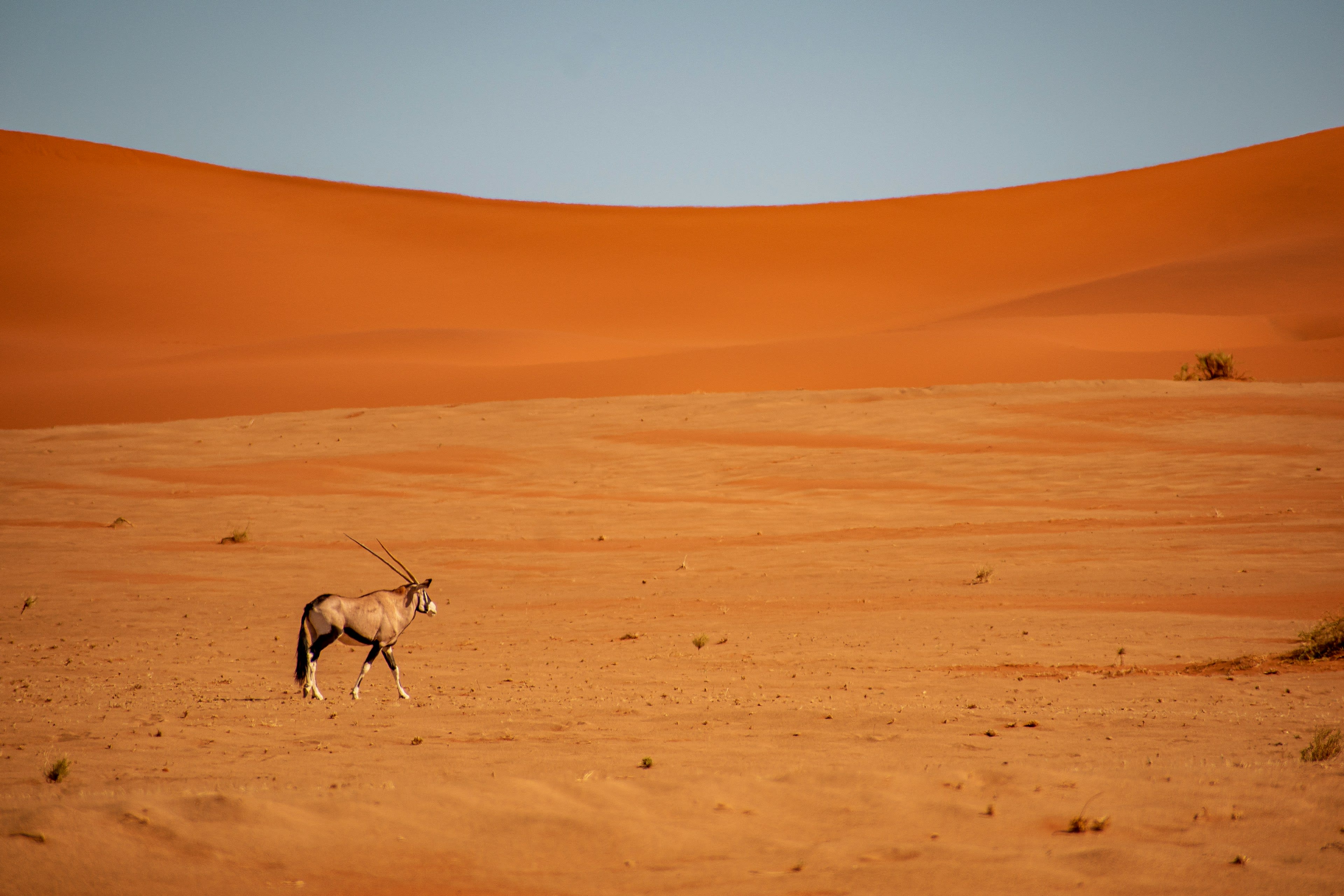
- 200mm · f/8 · 1/1250 · ISO 200
- 24.7000° S, 15.3500° E
- The dune valley, Sossusvlei
- 09:25
- 26°C, clear
An oryx came out of the dune valley and walked diagonally across the face at a distance I would guess at three hundred metres, and it went from being a dune to being a very large dune with an animal on it. They do not drink; they get water out of what they eat and let their own body temperature run up past forty. I have thought about that fact more than the photograph.
- Okaukuejo, Etosha
- 21:00
Thirty-one hours sat at the same waterhole across four days, and eleven minutes of that was the black rhino. That ratio is not a complaint, it is the entire method. If you are not prepared to spend the thirty-one you do not get the eleven, and nobody has ever found a shortcut.
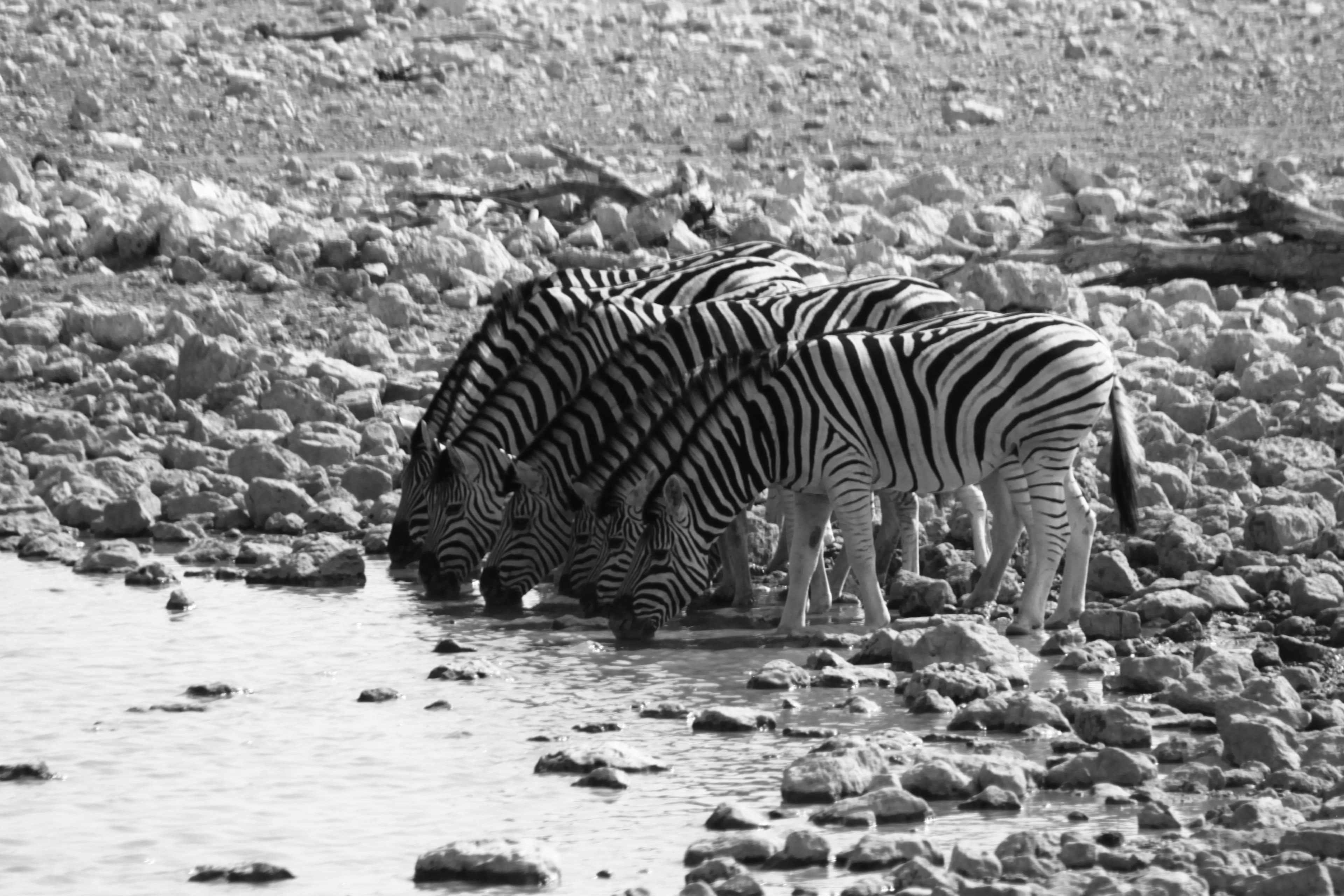
- 200mm · f/8 · 1/2000 · ISO 400
- 19.1670° S, 15.9170° E
- Okaukuejo waterhole, Etosha
- 15:10
- 33°C, hot, hard light
Zebras drink in a rank with their heads down and their ears going constantly, and the ones on the ends do almost no drinking at all. They came in three times in the afternoon and turned and left twice before anything touched the water. The light on white stone at that hour is a nightmare, so I converted it and stopped fighting.
- 200mm · f/4 · 1/1000 · ISO 640
- 19.0333° S, 16.4667° E
- A pan east of Halali, Etosha
- 17:25
- 28°C, dust in the air
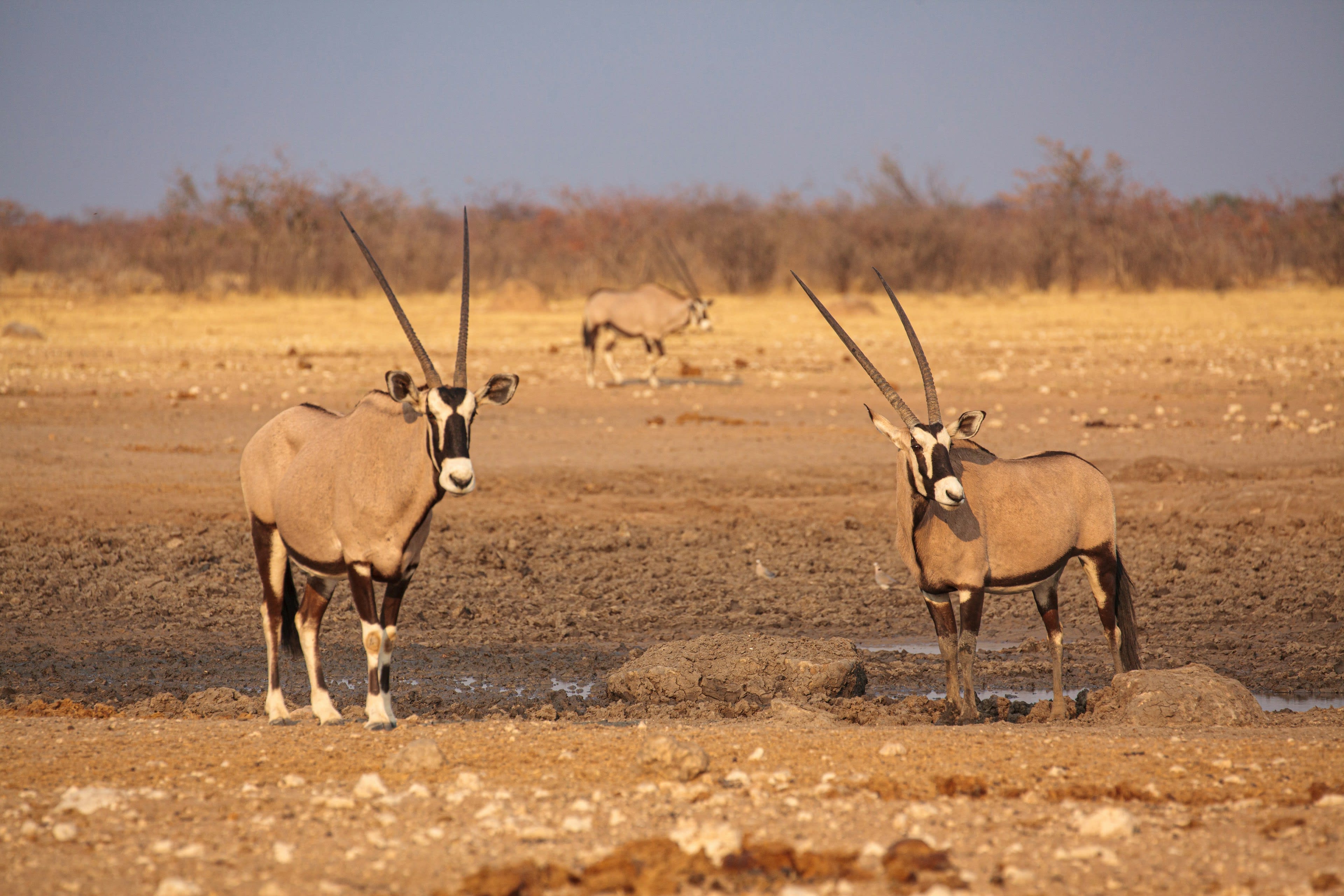
Late afternoon at a smaller pan east of the camp, with the light going orange through the dust that everything kicks up on the way in. Oryx have that face marking that makes them look permanently formal. These two came, drank for under a minute, and left, and neither of them looked at the vehicle once.
- 200mm · f/8 · 1/1600 · ISO 200
- 18.8500° S, 16.3300° E
- The southern edge of Etosha Pan
- 09:50
- 30°C, haze off the pan
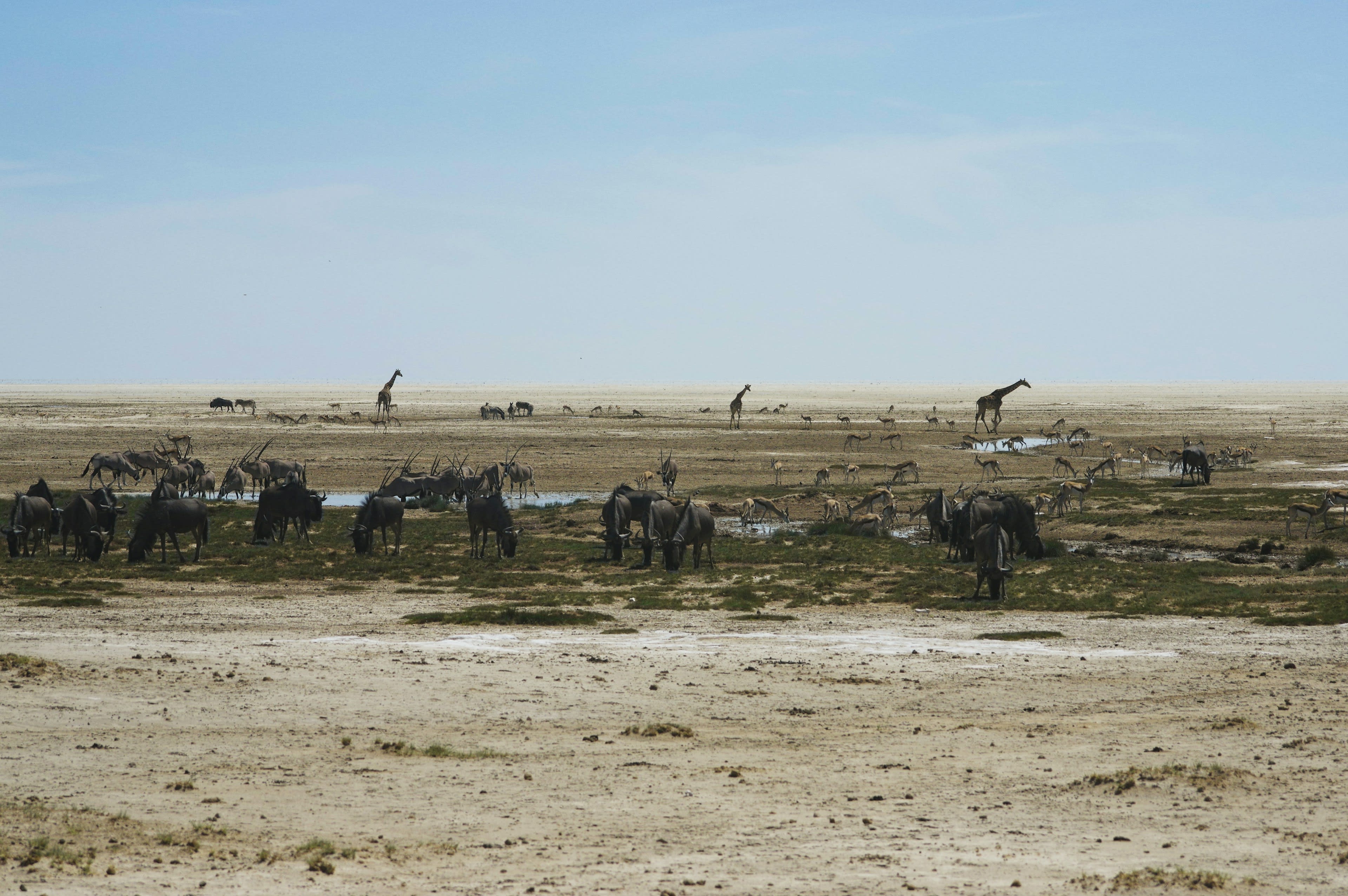
Etosha is a salt pan a hundred and thirty kilometres across that has been dry for most of two million years, and along its southern edge the water comes up in springs, so every animal in the park is on one white line. Zebra, wildebeest, springbok, giraffe, all in the same frame at four hundred metres, all doing nothing.
- The Skeleton Coast and Cape Cross
- 16:40
- 17°C, cold fog off the water
- Last frame
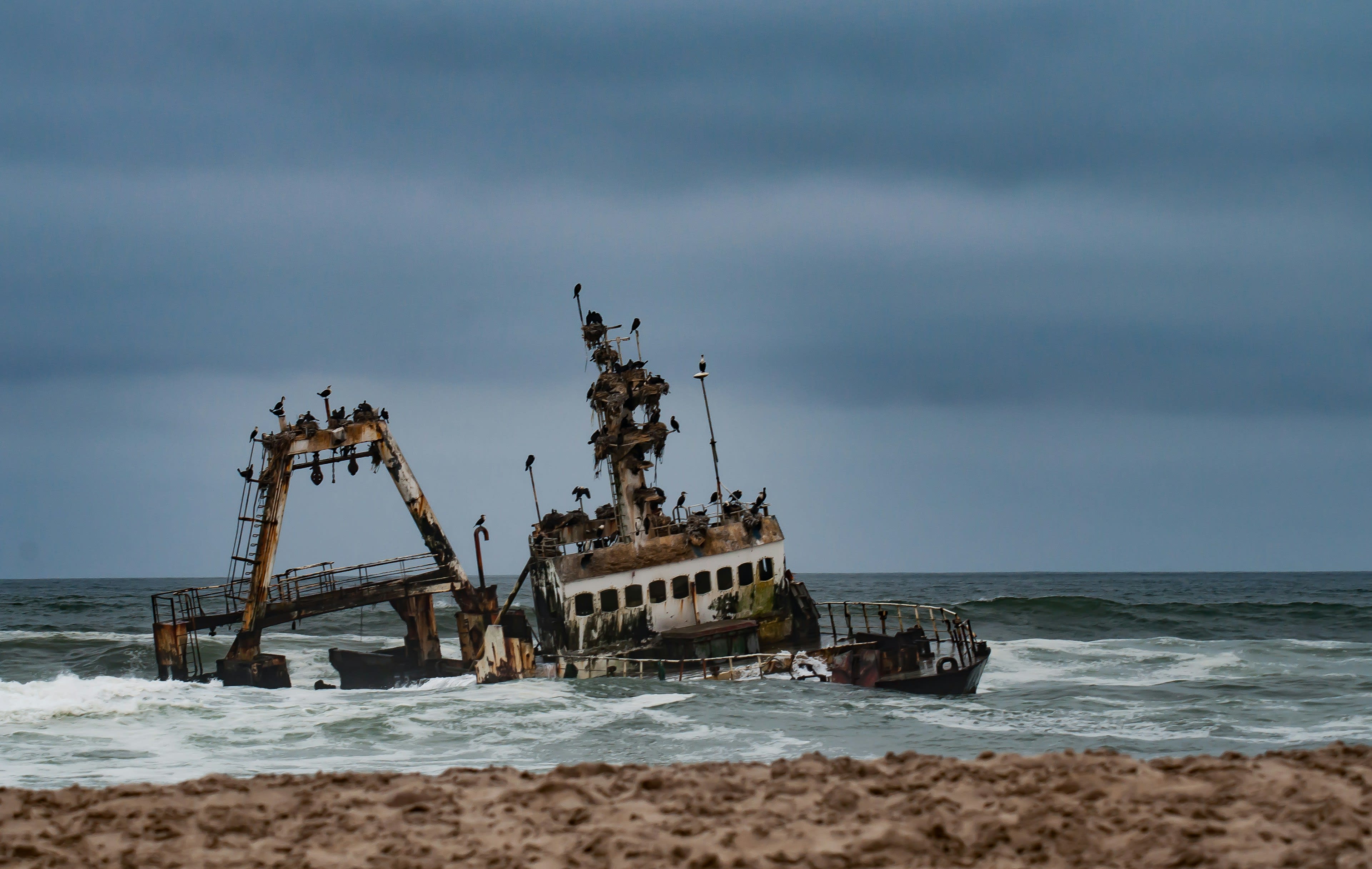
The last four days went to the coast, where the desert runs straight into cold Atlantic fog and there is a ship half-buried in the surf that has been there since 2008 and is now mostly a perch. Forty kilometres north of that, at Cape Cross, there are a hundred thousand seals on one beach and the noise and the smell arrive about a kilometre before the seals do.
- 135mm · f/8 · 1/800 · ISO 400
- 21.7700° S, 13.9500° E
The route
9 stops
Journey completed
Fifteen days, nine stories
- Distance walked
- 47 km
- Frames exposed
- 8900
- Kilometres driven
- 3,140
- Punctures
- 2
- Hours sitting at one waterhole
- 31
- Favourite moment
- The oryx that walked across the face of a dune three hundred metres away and made the whole dune make sense
- Best food
- Apple pie at the petrol station at Solitaire, which everybody tells you about and which is genuinely worth it